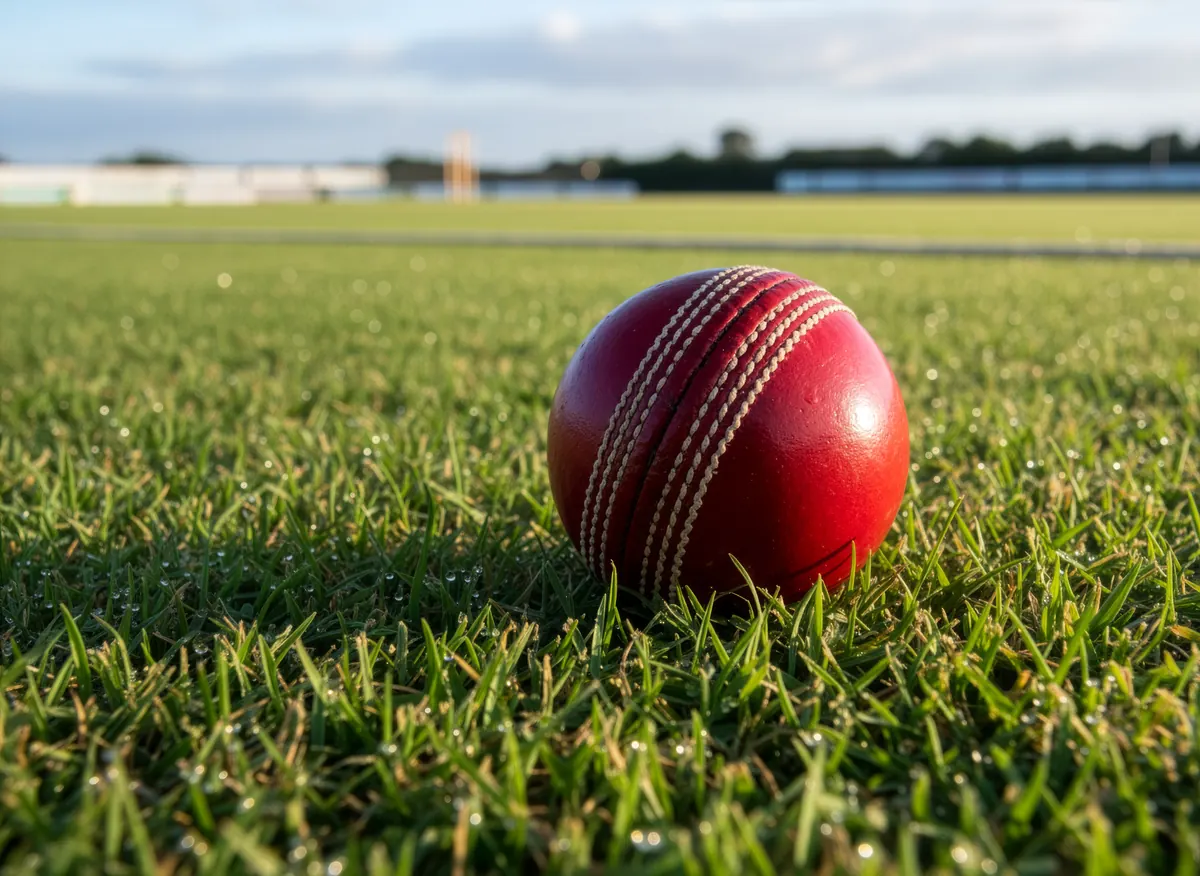
The Difference Between Leather and Synthetic Cricket Balls
Every cricketer knows the moment. You take a new ball, roll it in your palm, and the session ahead somehow feels decided. The seam under your fingers, the weight, the sound it makes on the bat — all of that changes depending on what the ball is made of. Leather and synthetic balls look similar from ten metres away. Up close, they behave like two different games.
What Each Ball Is Actually Made Of
A traditional leather ball is built in layers. At the centre sits a cork core, sometimes bound in rubber. Around it, layers of tightly wound twine are packed to give the ball its weight and bounce. The outside is four pieces of leather — or two, on cheaper training versions — shaped and stitched into a raised seam that usually runs six rows deep.
Synthetic balls take shortcuts on purpose. Most have a moulded rubber or plastic shell over a rubber core, often with the seam pressed in rather than stitched. The family runs from hard, heavy practice balls that behave a little like leather, through to soft windballs and lightweight junior balls that are really a separate category altogether.
How They Feel: Bat, Hand and Pitch
This is where the gap shows up first, and it shows up immediately.
Off the bat
A good leather ball comes off the middle with a crisp sound and real carry. Mishit it and your hands know about it. A softer synthetic tends to come off slower and deader — a thick clunk rather than a crack. Some hard synthetic practice balls actually sting more than leather on the splice, particularly in cold weather, because the shell doesn't give.
Off the pitch
Leather moves. A new ball swings because of its lacquer shine and pronounced seam, and even an older one keeps some seam movement when it lands on the stitching. Synthetic balls offer far less swing; what movement you get comes mostly off the surface, and the seam does much less work. If you're practising how to play a swinging ball, or how to bowl a genuine out-swinger, you need leather.
In the hand
Bowlers often say a leather ball "sits" in the fingers, which makes rolling the seam and releasing with the wrist behind the ball easier. Cheap synthetics vary badly here — once they pick up sweat or dust, some feel like a bar of soap.
Durability: Where Each One Wins
Leather is durable the way a good pair of boots is durable. Treated well, a top-grade ball holds its shape for a long time — shine gone, seam flattened, but still usable and honest. Treated badly, it dies young. Leave it in a wet kit bag, bowl it on concrete, or over-oil it, and the leather cracks, the seam splits and the ball goes out of shape.
Synthetic is durable the way a plastic crate is durable. Wet grass doesn't bother it. Abrasive surfaces scuff it without destroying it. But it has its own weak point: the surface goes shiny and slippery with use, the seam can split where the mould joins, and a hard synthetic that has cracked is unpleasant and slightly dangerous to face.
Cost and Value
There's no contest on the sticker price. A hand-stitched leather ball of match quality costs many times what a synthetic ball does. Synthetics are cheap enough to buy in a bag and lose without grief.
The smarter comparison is cost per useful session. If your practice involves a concrete net, a wet outfield or a group of juniors who will lose three balls before lunch, synthetic wins on value every time. If you're training for matches played with leather, skimping in the nets does you no favours — the weight, bounce and feel are simply different.
Practise with what you play with, and use the cheap stuff for the drills that would ruin it.
Which Ball for Which Job
- Nets before a leather match: leather, ideally a used one from a previous season. Ask your club — there are usually boxes of them.
- Throwdowns, catching and fielding drills: synthetic. You'll do dozens of repetitions, and a scuffed leather ball is wasted on them.
- Wet weather or muddy outfields: synthetic. A soaked leather ball is heavy, dull and ruined.
- Concrete, astroturf or indoor surfaces: synthetic, or whatever indoor ball your league uses.
- Juniors and beginners: start with a soft synthetic or windball, move up to a hard synthetic, then to leather. It protects hands and confidence.
- Match play: whatever the competition specifies — usually red for longer formats, white for limited overs, pink for day-night games.
- Swing and seam practice: leather only. There's no real substitute.
Getting More Out of Either Ball
A new leather ball needs looking after. Wipe it with a lightly oiled cloth — sparingly, once, not a soaking — then let it dry naturally. Keep it out of the sun and out of a hot car. Polish the shine with a dry cloth to help it swing, and never leave it at the bottom of a wet bag.
Synthetic balls need less, but not nothing. Wipe mud off with a damp cloth rather than scrubbing at the seam. Retire a ball once the shell has cracked or the seam has split; a hard ball with a sharp split lip is not something to bowl at a mate. And whatever ball you use, wear proper protection. A hard synthetic at close range is not the soft option it looks like.
A Simple Way to Choose
Buy leather when the session is meant to prepare you for a match played with leather, and buy synthetic for everything else. Keep one good leather ball for serious net work and a handful of cheap synthetics for the messy, high-volume drills that build skill without costing a fortune. That way the ball in your hand always matches the job in front of you — and you're not the one who leaves the match ball in a wet kit bag.
Photo: Rising Studio 07 / Pexels